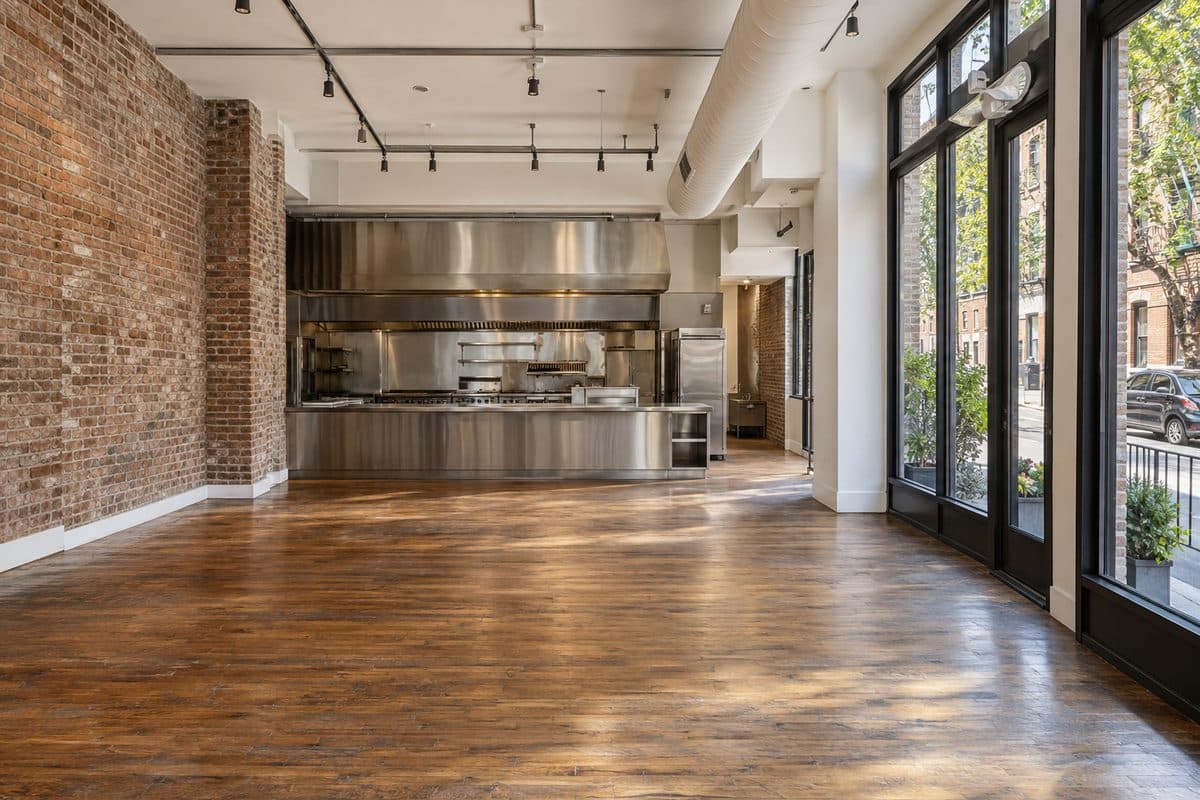
Chef-driven restaurant, vented space
Posted by the tenant · Hospitality
- Where
- East Village, Lower East Side +1
- Size
- 1,500 to 3,000 SF
- Budget
- to $160/SF
- Move in
- Jan 2027
Kitchen / vented
Owners: got a fit?I have a fit
Every restaurant space for lease on Leasemark across the 26 Manhattan neighborhoods we cover (Midtown, Grand Central, Times Square, Hudson Yards, Hell's Kitchen, Garment District, Midtown South, Flatiron, Union Square, Chelsea, Meatpacking, SoHo, NoHo, Tribeca, Hudson Square, Financial District, Murray Hill, Greenwich Village, West Village, East Village, Lower East Side, Chinatown, Harlem, Upper West Side, Upper East Side and Washington Heights), plus the tenants and buyers looking there right now.
Building figures are existing stock from NYC PLUTO 26v2 tax lot records, not space on the market, summed across the 26 Manhattan neighborhoods Leasemark covers. By neighborhood below.
On Leasemark No restaurant space for lease and no requirements posted in Manhattan yet. Post yours and it is matched the day it goes up.
2 related real spaces: retail space for lease at 27 East 61st Street in the Upper East Side (9,470 SF, $159/SF/yr), and 1 more.
Need a restaurant space in Manhattan? Post what you need for free: the type of space, the neighborhoods, a size range, a budget and a move-in date. You need no broker, and a tenant rep can post it for you. Owners and listing brokers see the need but not your name or company, and every space that fits reaches you with a score, including spaces listed later. Post it here: https://leasemark.co/post/requirement?type=restaurant&deal=lease
Have a restaurant space to lease in Manhattan? Listing is free, with no fees, no commission and no exclusive, so the same space can stay on LoopNet or Crexi too. Tenants, buyers and tenant rep brokers find it on Leasemark's search and neighborhood pages, and it is matched against every active requirement the moment you post. List it free Broker with more than one space? Upload your sheet or CoStar export, up to 50 spaces a file.
New restaurant spaces in Manhattan are matched to requirements the day they are posted. Post yours and be first in line. The labeled example below shows how a space appears here; it is not on the market.
Listed now by their owners or brokers, close to what this page covers. Open one and tap I'm interested to ask the lister for an intro; contact details are shared once both sides accept.
Listed as retail space, not as a restaurant
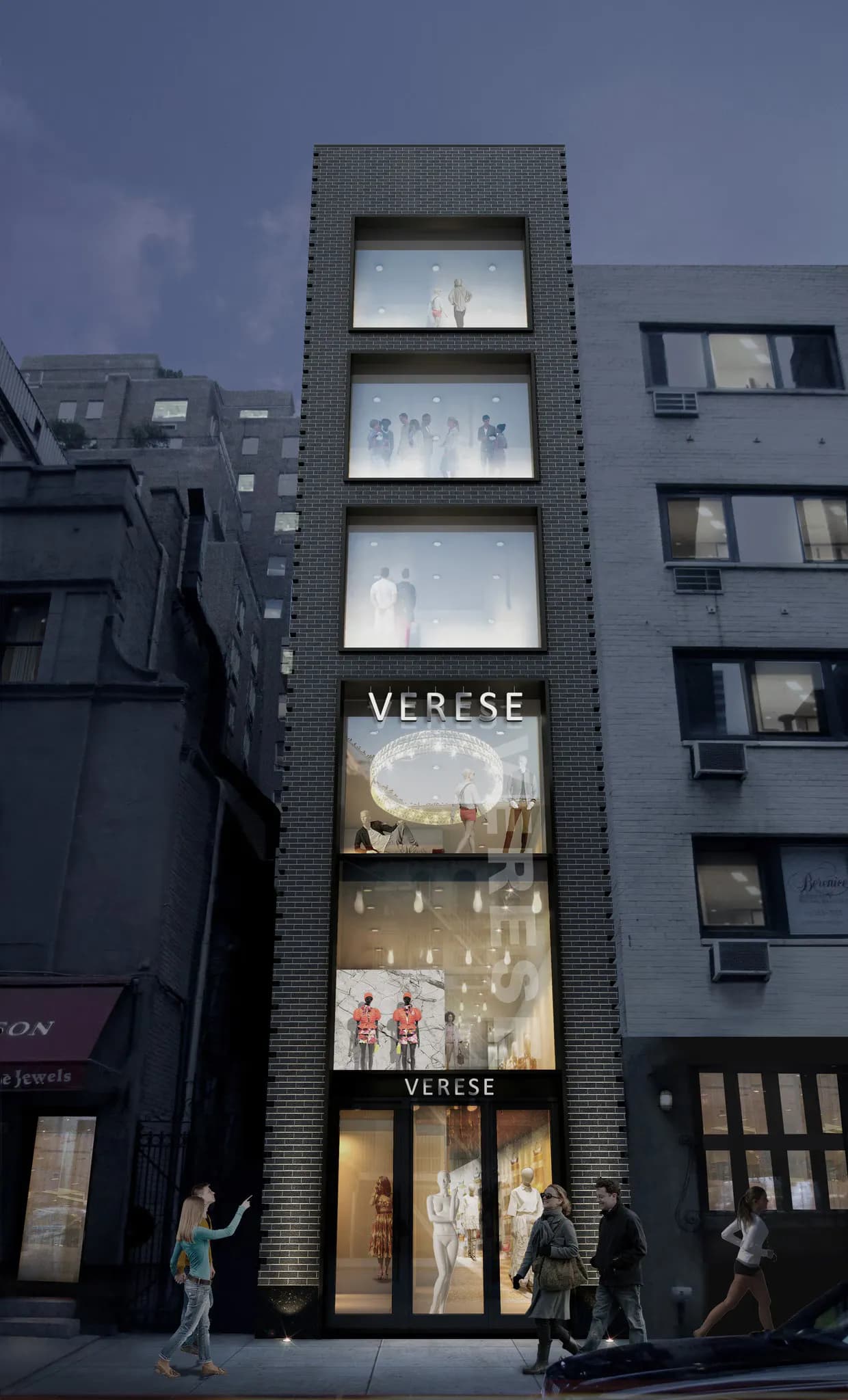
Listed as retail space, not as a restaurant
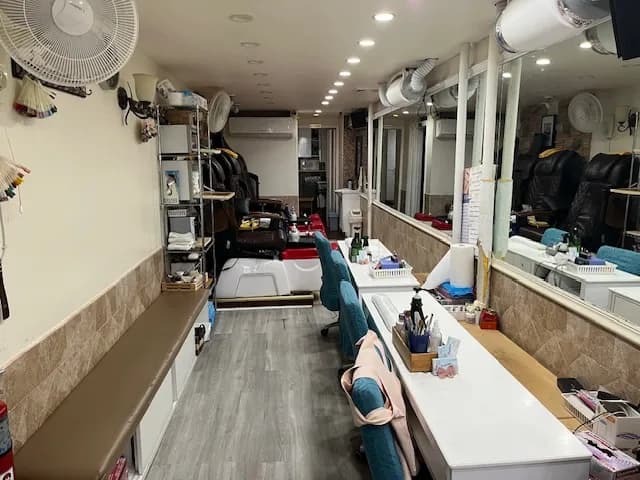
No live requirements in Manhattan yet. These labeled examples show what tenants post. Owners: list a space and we match it against every new requirement automatically.
Posted by the tenant · Hospitality
For owners and brokers
Tenant alerts send a notification when a requirement that fits your neighborhoods, types and sizes is posted, before you list anything. Real requirements only. Free during Broker Pro early access.
NYC Department of Finance filings
In 2024, 1,328 Manhattan retail properties filed income statements with the city. Their median gross income was $64.71 per square foot, and the middle half collected between $38.35 and $104.91. The typical property's income was up 2.1% on 2023.
Turn a price per square foot into monthly rentWhat tenants pay on top of rent
Source: NYC Department of Finance, FY 2027 RPIE 2024 Income and Expense Distributions (FY 2027 assessment roll, published January 2026), page 16. Owners of income-producing properties file a Real Property Income and Expense statement each year; gross income is everything a property collected in 2024 per square foot, as filed, with outlier and partial-year filers left out. It includes vacant space, concessions and older leases, so it is not an asking rent.
NYC restaurant inspections
Every restaurant the city's Health Department has on file in Manhattan, how many got a new permit in the last 12 months, and where they cluster by neighborhood and street.
Restaurants across New York City
Source: NYC Department of Health and Mental Hygiene, Restaurant Inspection Results, records as of October 23, 2026, pulled 2026-10-24. Counted by permit; business names are not shown. Counts are food service permits in an active status: restaurants, cafes, bakeries, bars that serve food and similar places. A new permit is either a new restaurant or a new operator taking over an existing one.
NY State Liquor Authority
Every on-site liquor license the State Liquor Authority lists in Manhattan, the applications waiting, and the neighborhoods where the 500-foot rule reaches furthest.
A new full liquor license for drinking on site cannot be issued within 500 feet of three or more places that already hold one, unless the State Liquor Authority finds at a hearing that it is in the public interest (ABC Law, section 64). Here 4,076 of 4,328 full-liquor places have three or more others within 500 feet, so almost any new full liquor license here would need that hearing. Beer and wine licenses are not subject to the rule.
Liquor licenses across New York City
Source: New York State Liquor Authority, Current Liquor Authority Active Licenses and Current SLA Pending Licenses, as of October 23, 2026, pulled 2026-10-24. Counted by license; business names are not shown. Only licenses to drink on site count: full liquor for restaurants, bars, hotels, clubs and similar places, and beer and wine. Stores, boats and second bars of a licensed place are left out. The 500-foot figures count each place once (one holding two licenses is one place) and only places with a map point; distances run between those points, while the law measures from the nearest entrances, so treat them as an estimate.
NYC storefront registry
Every ground- and second-floor storefront owners registered in Manhattan for the end of 2025, and how many stood vacant: where retail and restaurant tenants have the most choice, by street and neighborhood.
Owners of 302 of the 997 large buildings we track in Manhattan with registered storefronts reported at least one vacant on December 31, 2025, 178 of them at 3 or more year ends in a row. Each links to the building's filings by year. Not listings: the registry records no size, rent or asking terms.
| Building | Vacant storefronts | Reported vacant |
|---|---|---|
| Moynihan Train Hall, 441 Eighth Avenue | 36 of 75 | Every year end since 2022 |
| 261 Eleventh Avenue | 25 of 28 | Every year end since 2019 |
| 100 West 33rd Street | 12 of 13 | Every year end since 2019 |
| 1538 Broadway | 8 of 16 | Every year end since 2021 |
| 805 Third Avenue | 8 of 18 | Every year end since 2021 |
| 875 Third Avenue | 8 of 20 | Every year end since 2022 |
| Chrysler Building, 395 Lexington Avenue | 8 of 11 | End of 2025 |
| U.S. Rubber Company Building, 1230 Avenue of the Americas | 7 of 40 | Every year end since 2019 |
| 234 West 42nd Street | 6 of 13 | Every year end since 2019 |
| 280 St. Nicholas Avenue | 6 of 14 | Every year end since 2019 |
Own or represent a vacant storefront? List it free and it is matched against every restaurant requirement the day it goes up.
NYC storefront vacancy report: every borough, neighborhood and street, by year
The city housing authority rents stores too: NYCHA stores for rent, with asking rents and use limits.
Source: NYC Department of Finance, Storefronts Reported Vacant or Not (Local Law 157), annual filings, pulled 2026-10-16. Owners of buildings with ground- or second-floor storefronts register each one every year with its status on December 31. A vacant storefront is not always on the market: some are being renovated, held empty or already leased to a tenant who has not moved in.
NYC tax lot records
Where Manhattan's existing retail space stands, neighborhood by neighborhood, from the city's own property data, next to the other boroughs. Useful for choosing where to search before a single space is listed.
Source: NYC Department of City Planning, PLUTO 26v2, pulled 2026-10-16. Figures are sums of the 26 Manhattan neighborhoods Leasemark covers (tax lots with commercial floor area near each neighborhood's commercial core, each lot counted once), not totals for the whole borough. Building figures are the city's floor-area estimates, not available space.
Plain-English guides to square footage, rent and lease terms in New York, and free calculators to run your own numbers.
What NYC office, retail and industrial buildings collect per square foot in each borough, from the city's own filings, with the monthly math and the costs on top of rent.
How a good guy guarantee works in a NYC commercial lease: what it covers, how the guarantor gets released, what to negotiate and the 2025 surrender ruling.
A New York retail lease covers much more than rent. Here is what percentage rent, escalations, pass-throughs, use clauses and restaurant terms mean for you.
No restaurant space for lease in Manhattan is listed on Leasemark right now. Related spaces on Leasemark: retail space for lease at 27 East 61st Street in the Upper East Side (9,470 SF, $159/SF/yr); retail space for lease at 201 Avenue A in the East Village (400 SF, $210/SF/yr). Post what you need and Leasemark matches you the day a space that fits is listed; your contact details stay private until you accept an intro. Owners and brokers can list a space here for free.
Leasemark has no asking rents posted here yet, so here are the city's own numbers. Retail buildings in Manhattan collected a median $64.71 per square foot in 2024, and the middle half between $38.35 and $104.91, according to the income and expense statements owners file with the NYC Department of Finance (FY 2027 distributions, 1,328 filings). That is what buildings actually collected, with vacant space, concessions and leases signed years ago in the mix, so it is a baseline rather than a quote: a specific space's price depends on the building's class, floor, condition and the length of the lease.
Post a requirement on Leasemark. Owners and listing brokers see what you need (without your contact details) and can respond with spaces, including ones that are not on the market yet. You choose who gets an intro.
The NYC Health Department had 10,791 restaurants and other food service places with an inspection on file in Manhattan as of October 2026, and 1,745 more had applied for a permit and were waiting for their first inspection. The most common kinds are American (2,442), coffee and tea (1,109) and Italian (606). The streets with the most are Broadway (711), Second Avenue (384) and Third Avenue (350).
1,419 food service places in Manhattan had their first pre-permit health inspection in the 12 months to October 23, 2026, 13% of the 10,791 open there. Counts are food service permits in an active status: restaurants, cafes, bakeries, bars that serve food and similar places. A new permit is either a new restaurant or a new operator taking over an existing one. Places that opened and closed again within the year are not counted.
The New York State Liquor Authority listed 4,427 active full liquor licenses and 1,561 beer and wine licenses for drinking on site in Manhattan as of October 23, 2026. 505 more applications for on-site licenses were waiting for a decision, 352 of them for full liquor.
New York's 500-foot rule (Alcoholic Beverage Control Law, section 64) bars a new full liquor license for on-site drinking within 500 feet of three or more places that already hold one, unless the State Liquor Authority finds at a hearing that it is in the public interest. In Manhattan, 4,076 of the 4,328 places with a full liquor license (94%) have three or more others within 500 feet, so almost any new full liquor license here would need that hearing. A beer and wine license is not subject to the rule and does not count toward it. Distances here are between map points, so check the exact address before you sign a lease.
Owners registered 24,024 ground- and second-floor storefronts in Manhattan with the NYC Department of Finance for the end of 2025, and 2,773 of them (11.5%) stood vacant on December 31, 2025, against 9.2% citywide and 11.1% in Manhattan a year earlier. The streets with the most storefronts are Broadway (1,734 storefronts, 208 vacant), Third Avenue (808 storefronts, 118 vacant) and Second Avenue (712 storefronts, 70 vacant). A vacant storefront is not always on the market: some are being renovated, held empty or already leased to a tenant who has not moved in.
Owners of 302 of the 997 large buildings Leasemark tracks in Manhattan with registered storefronts reported at least one vacant on December 31, 2025, 178 of them at 3 or more year ends in a row. The most vacant: Moynihan Train Hall, 441 Eighth Avenue (36 of 75 storefronts), 261 Eleventh Avenue (25 of 28 storefronts) and 100 West 33rd Street (12 of 13 storefronts). Each building's page shows its filings by year. A vacant storefront is not always on the market: some are being renovated, held empty or already leased to a tenant who has not moved in.
New York City's PLUTO tax lot data (26v2) records about 97.1 million square feet of retail floor area across 13,720 properties in the 26 Manhattan neighborhoods Leasemark covers, 48% of the retail space in all 80 covered New York City neighborhoods. That is existing building stock in those neighborhoods, not a total for the whole borough and not space currently for lease.
By floor area in the city's tax lot data: Midtown (about 16.3 million square feet), the Upper East Side (about 7.6 million square feet) and the Upper West Side (about 6.8 million square feet). The largest single retail building on record in Manhattan is 441 Seventh Avenue in the Garment District, at about 2.2 million square feet.
Only for space south of the center line of 96th Street, and only for larger leases. Premises north of 96th Street and in the other boroughs do not pay it at any rent, and Lower Manhattan has its own exemptions for stores south of Murray, Frankfort and Dover Streets and premises in the World Trade Center area. A tenant owes it only when base rent for the space is $250,000 a year or more. The tax is 6% of base rent after a 35% reduction, so 3.9% of rent, with a sliding credit between $250,000 and $300,000, and the Small Business Tax Credit wipes it out for businesses with total income of $5 million or less and base rent under $500,000.
Yes. Posting a space or a requirement is free. Contact details are only shared when both sides accept an intro.